AI video vs. traditional production: what changes, what doesn't
AI video is faster and more flexible than a traditional shoot, but it isn't a replacement for everything. Here's an honest guide to what changes, what stays the same, and when to use which.
If you're planning a video campaign today, you've probably asked yourself some version of this question: should we shoot it, or should we make it with AI?
It's a fair question, and the honest answer is: it depends on what you're making. AI video isn't a cheaper copy of traditional production, and it isn't a magic replacement for it. It's a different way of working, with different strengths.
Here's a practical comparison of AI video vs. traditional production, based on how we approach projects at Kaf.Social.
What changes
Speed
Traditional production moves in phases: pre-production, casting, location scouting, the shoot, then post. Each phase depends on the one before it, and a single change late in the process can be expensive.
With AI video production, many of those phases compress. Worlds, scenes and shots can be explored and generated in days rather than weeks. Concepts can be tested visually before anyone commits to a direction.
Cost structure
On a shoot, a large part of the budget goes to things that exist only for the shoot: crew, equipment, locations, travel, sets. With AI, much of that physical cost disappears.
That doesn't make AI video free. The budget shifts toward ideas, direction, generation, selection and post-production. But for many projects, especially ones with ambitious visuals, the overall cost can be meaningfully lower.
What's possible
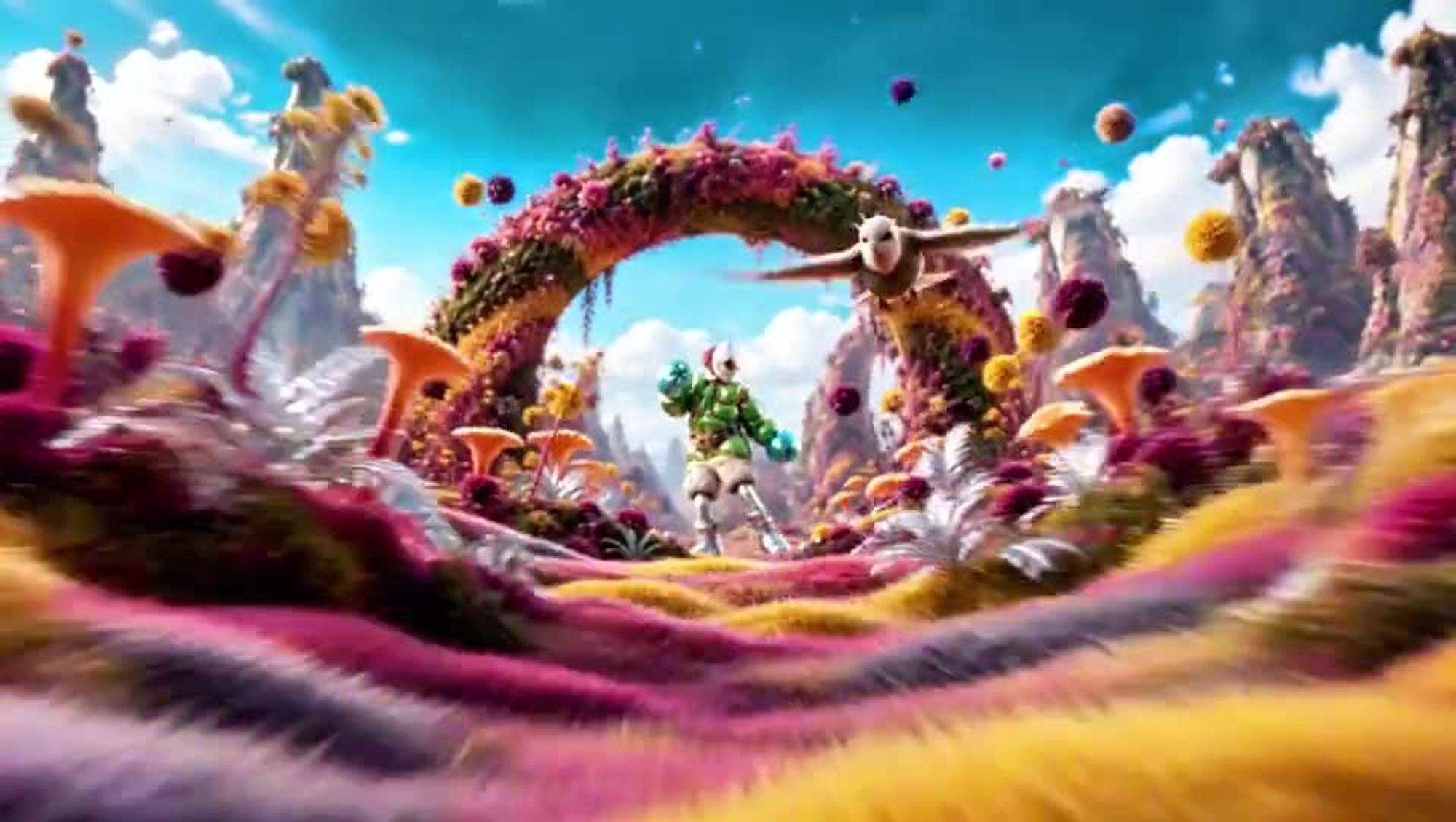
This is the biggest change. On a traditional shoot, ambition is limited by physics and budget. A monster truck with pink inflatable wheels, a sweater made of real flowers floating over the sea, a skateboarder made of petals: these would be expensive or impossible to film.
With AI, the question becomes should we? instead of can we afford to?
Iteration and variation
Changing a traditional video after the shoot often means reshooting. With AI, changing a background, a color palette or a scene is far more flexible. That makes AI especially strong for campaigns that need many versions: different formats, hooks, audiences and lengths. (We wrote about that in From one concept to fifty ads.)
What doesn't change
You still need an idea
No tool decides what your video should say. A weak concept made with AI is still a weak concept, just delivered faster. (More on this in Prompts are not ideas.)
You still need direction and taste
Generation produces options. Someone still has to choose the right ones, notice what's wrong, and shape it into something with rhythm and feeling. That role doesn't shrink with AI. It becomes more important.
Post-production still matters
Editing, color, sound design and motion are what make a video feel finished. AI footage benefits from the same craft as filmed footage, sometimes more.
Brand standards still apply
Your logo, your product, your colors and your tone of voice don't become flexible because the tools are new. Every frame still needs to be checked against the brand.
Where traditional production still wins
Being honest about limits is part of choosing well. Traditional production is often the better choice when:
- Real people are the point. Testimonials, founders, interviews and real customers should be filmed, not generated.
- Exact product accuracy is critical. If every detail of a physical product must be perfect in every frame, filming it (or combining real product footage with AI scenes) is safer.
- Long, dialogue-driven stories. Extended scenes with consistent characters and natural dialogue are still easier to direct with a camera and actors.
- Documentary and live moments. Events, behind-the-scenes and anything that needs to be true to life.
The best answer is often both
Many of the strongest projects are hybrid. A real product shot placed into an AI-generated world. A filmed founder introduction followed by AI-built visual sequences. Real footage extended, restyled or turned into dozens of variations.
The goal isn't to pick a side. It's to use each method where it's strongest.
A quick comparison
| Traditional production | AI video production | |
|---|---|---|
| Timeline | Weeks to months | Days to weeks |
| Main costs | Crew, locations, equipment, shoot days | Ideas, direction, generation, post |
| Visual ambition | Limited by budget and physics | Limited mainly by imagination and craft |
| Changes after delivery | Often require a reshoot | Usually flexible |
| Variations at scale | Expensive | A core strength |
| Real people & testimonials | Best choice | Not suitable |
How to choose
Ask three questions:
- Does this video need real people or real events? If yes, start with a shoot.
- Does it need visuals that would be expensive or impossible to film? If yes, AI is likely the better fit.
- Will you need many versions for different platforms and audiences? If yes, build with AI, or plan a hybrid.
Whatever you choose, the deciding factor won't be the tool. It will be the idea and the craft behind it.
FAQ
Is AI video cheaper than traditional production?
Often, especially for visually ambitious work and campaigns that need many variations. The budget shifts from physical production to ideas, direction and post-production.
Will AI video look "fake"?
It can, when it's made without care. With strong direction, careful selection and proper post-production, AI video can look intentional and premium.
Can you combine real footage with AI?
Yes, and it's often the best approach. Real product shots, real people and AI-generated worlds can work together in the same video.
Not sure which approach fits your project? Tell us about it, and we'll recommend the right mix.
Keep reading
 Point of view3 Oct 2026
Why taste matters more than ever in AI video
AI made it easy to generate video. It didn't make it easy to make video worth watching. The difference is taste, and it's now the most valuable part of production.
 Process3 Oct 2026
From one concept to fifty ads: how we build variations
Performance marketing runs on testing, and testing runs on variations. Here's how we turn a single idea into a full set of AI video ads without losing the idea along the way.
 Craft3 Oct 2026
Prompts are not ideas
A prompt tells a machine what to make. An idea tells an audience why it should care. Confusing the two is the fastest way to make AI video that looks good and means nothing.