From one concept to fifty ads: how we build variations
Performance marketing runs on testing, and testing runs on variations. Here's how we turn a single idea into a full set of AI video ads without losing the idea along the way.

Every performance marketer knows the rule: you don't know which ad will work until you test it. And you can't test what you haven't made.
For years, that was the bottleneck. A single video ad took days to produce, so teams tested three versions when they should have tested thirty. AI video changes the math. But it also introduces a trap: when variations are cheap, it's easy to make fifty ads that are all slightly different and none of them good.
Here's how we build AI video ads at scale without losing the idea.
Step 1: One concept, not fifty
Variations start with a single, strong concept. Not a theme, not a mood board, but an actual idea you could explain in one sentence. "Our product turns the most boring part of your morning into the best part." That kind of sentence.
This matters because every variation that follows is a different way of expressing the same idea. If the concept is weak, multiplying it just gives you more weak ads. If it's strong, every variation has something real to say.
We spend more time here than anywhere else. It's the cheapest stage to get right, and the most expensive to get wrong.
Step 2: Break the ad into parts
Next, we split the concept into modular pieces. Most short video ads follow a similar shape:
- Hook — the first one to three seconds that earn attention
- Story — what happens, the problem, the transformation
- Proof — product shots, demonstrations, details that build trust
- Call to action — what the viewer should do next
Once the ad is modular, each part can vary independently. That's where the scale comes from.
Step 3: Choose what to vary (and what not to)
Not everything should change. We pick a few deliberate variables and keep the rest fixed, so test results actually tell us something.
The variables we use most often:
Hooks. The highest-impact variable in almost every test. Same ad, different opening: a bold visual, a question, an unexpected scene, a product close-up.
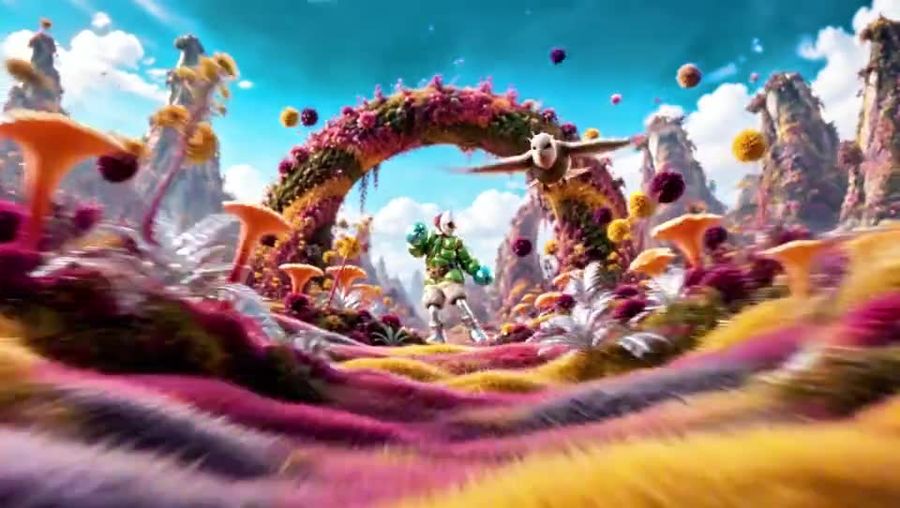
Visual worlds. This is where AI shines. The same story can play out in a minimal studio, a surreal landscape or an everyday kitchen, without three separate shoots.
Formats. Vertical 9:16 for Reels, TikTok and Shorts, square or 4:5 for feeds, horizontal 16:9 for YouTube and the web. Each format gets its own framing, not just a crop.
Length. A 6-second version, a 15-second version, a 30-second version. Different placements reward different lengths.
Audience angle. The same product framed for different needs: one version about saving time, another about looking good, another about value.
A simple example of how it multiplies: 5 hooks × 2 visual worlds × 3 formats already gives you 30 ads from one concept, before you touch length or audience. The point isn't to make every combination. It's to make the combinations worth testing.
Step 4: Produce with a system
This is the part that used to take weeks. With AI in the pipeline, we can generate scenes, worlds and product shots quickly, then assemble them into a consistent structure.
But speed isn't the goal on its own. Every variation still goes through the same human checks: Does the hook land in the first second? Is the product shown correctly? Does it feel like the brand? Would we stop scrolling for this?
Variations that fail those questions don't ship, no matter how fast they were to make.
Step 5: Test, learn, repeat
A set of variations is really a set of questions. Do people respond more to the surreal world or the realistic one? Does the question hook beat the visual hook?
When results come in, we don't just keep the winner. We look at why it won, and feed that back into the next round. Over time, each round of AI video ads gets sharper, because it's built on what the last round taught us.
What makes this work
AI makes variation cheap. That's the easy part. What makes variation valuable is everything around it:
- A concept strong enough to survive being repeated
- A structure that makes each variable testable
- Judgment about what's worth making
- Craft in the details, so volume never looks like volume
Fifty ads from one idea is only impressive if the idea was good, and every one of the fifty looks like it was made on purpose.
Planning your next campaign? Tell us about your video project.
Keep reading
 Point of view3 Oct 2026
Why taste matters more than ever in AI video
AI made it easy to generate video. It didn't make it easy to make video worth watching. The difference is taste, and it's now the most valuable part of production.
 Craft3 Oct 2026
Prompts are not ideas
A prompt tells a machine what to make. An idea tells an audience why it should care. Confusing the two is the fastest way to make AI video that looks good and means nothing.
 Guide3 Oct 2026
AI video vs. traditional production: what changes, what doesn't
AI video is faster and more flexible than a traditional shoot, but it isn't a replacement for everything. Here's an honest guide to what changes, what stays the same, and when to use which.